How to Replace Wiper Blades: Step-by-Step Guide for All Mount Types
Replacing wiper blades is one of the simplest maintenance jobs on a car: no tools, no garage, five minutes of your time. Even so, many drivers hesitate – usually for fear of buying the wrong wipers or damaging the mount. This guide takes you through both topics.
When do wiper blades need replacing?
Rubber ages – regardless of how often you wipe. UV light, ozone, frost and dirt make the wiper lip hard and cracked. Typical signs:
- Smears or streaks on the glass
- Squeaking or chattering when wiping
- Unwiped zones, especially in your field of view
- Visible cracks or frayed edges on the rubber lip
As a rule of thumb: replace once a year, ideally in autumn before the rain and frost season. After a hard winter a second replacement in spring is often worthwhile.
Step 1: Find the right size
Wiper blades are vehicle-specific – the driver's and passenger's side almost always have different lengths, and the mount can change even between two model years of the same model. Three ways to find the right size:
- Owner's manual of the vehicle
- Measure the old wipers (length in cm/inches) – this only works if the old ones were correct
- Online vehicle search: at TopWipers you choose make, model and year and see all the matching wiper blades with size and mount type – go to the vehicle search.
Step 2: Identify the mount type
This is the biggest source of error. There are well over a dozen connector variants, and even within one model the mount and length can differ depending on the year, the facelift and even the side. The table shows the most common types – as a rough guide, not a rule:
| Mount type | Typical for | How to recognise it |
|---|---|---|
| Hook (U-Hook) | older models, many Asian cars | U-shaped metal hook on the wiper arm |
| Push Button | VW, Ford, Volvo, Renault | button on the adapter cap |
| Side Pin | BMW, Mercedes, Audi | side pin (16–22 mm) |
| Bayonet | older French cars, trucks | narrow arm clicks in lengthwise |
| Top Lock | newer US and Asian models | arm engages the holder from above |
Don't rely on “make = mount type” – the only authoritative check is for your specific vehicle via the vehicle search. You will find a detailed overview with photos in our article on wiper blade mount types, and video guides for the individual types on our YouTube channel.
Step 3: Remove the old wiper
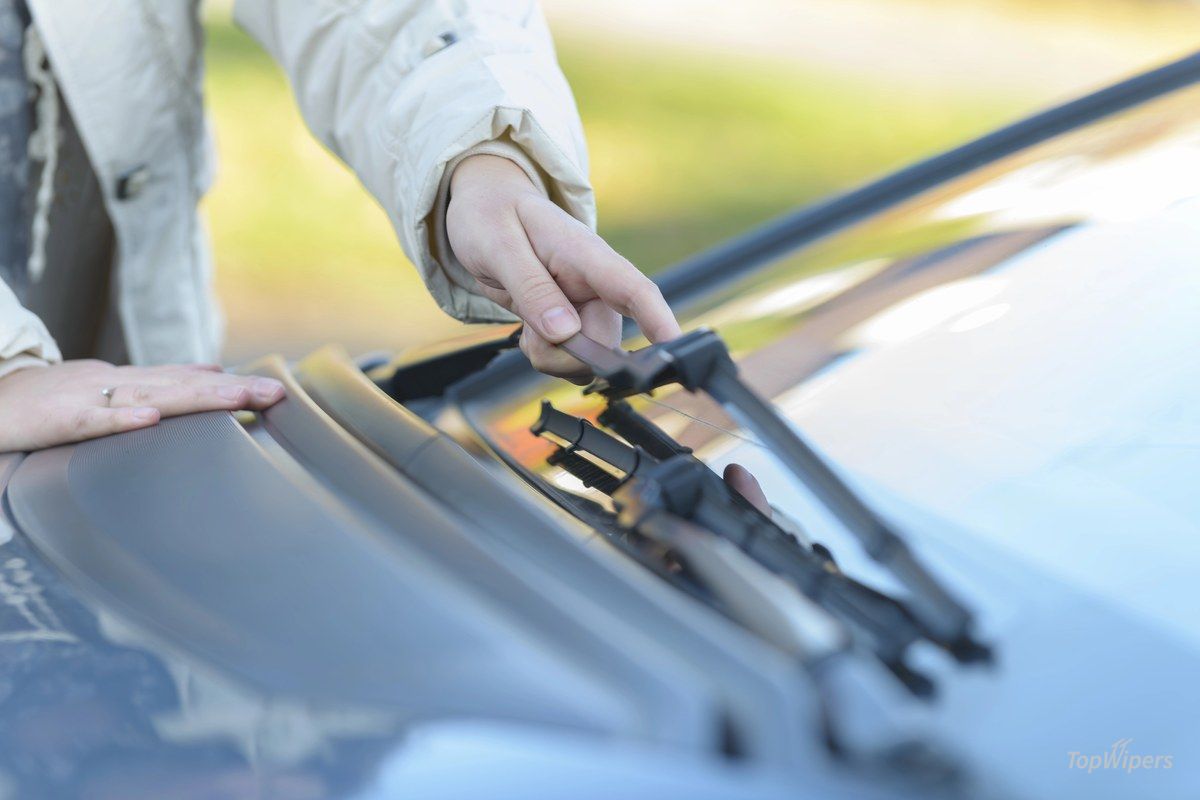
- Carefully fold the wiper arm away from the glass until it stands up. Tip: lay a towel on the windscreen – if the arm snaps back, it prevents damage to the glass.
- Turn the wiper blade at right angles to the arm.
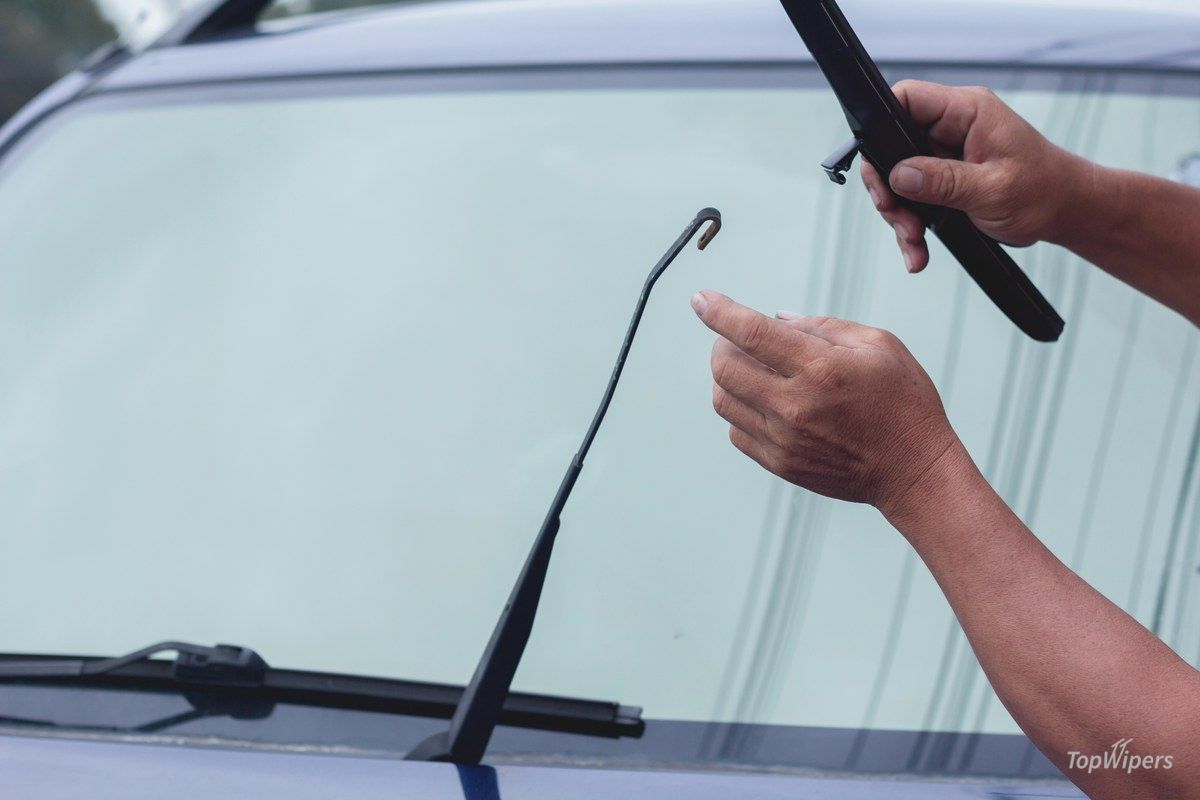
- Release the lock: with a hook, press the tab and slide the blade down out of the hook; with a Push Button, press the button and pull the blade off sideways; with a Side Pin, open the clip and pull the blade off the pin.
If it sticks: don't use force, but take another look at the locking mechanism – there is always a tab, a button or a clip somewhere.
Step 4: Fit the new wiper
Fitting works in reverse: position the blade, push it in until it clicks audibly (“click”), pull gently on the blade to check it is seated firmly, then slowly lower the arm back onto the glass.
When it comes to adapters there are two worlds: OE wipers are Direct Fit – for example the Bosch Aerotwin with an A number fits the intended connector exactly, without any adapter. Universal ranges (Bosch Aerotwin Multi-Clip/Retrofit, Valeo Multiconnect and others), on the other hand, come with several adapters – use only the one that fits, and leave the rest in the packaging. For the classic hook connector used by many Japanese models, the Denso Hybrid is a top choice – it is original equipment on Toyota and other Japanese brands.
Important: Never let the arm snap onto the glass without a wiper blade – and don't run new wipers over dry glass.
Step 5: Function test
Spray the glass with water and run the wipers briefly. The new wiper must work without squeaking, chattering or streaking. If it doesn't, the adapter is usually not seated correctly – removing and refitting it once almost always solves the problem.
Common mistakes when replacing wipers
- Replacing only one side: both rubbers age at the same rate – always replace in pairs. Don't forget the rear wiper.
- Buying the wrong length: “roughly right” leads to unwiped zones or blades that knock against each other.
- Forcing the adapter: if the adapter doesn't fit without force, it is the wrong one – don't push, check.
- “Refreshing” the rubber with household remedies: vinegar, oil or silicone spray do not measurably extend the life of the wiper lip and can attack the glass coating.
FAQ
How much does a wiper blade replacement cost?
If you do it yourself you only pay for the blades: branded wipers (Bosch, Valeo, Denso) cost €15–35 per pair depending on size. Garages charge an additional €10–20 for fitting.
How long do wiper blades last?
As a guideline, about 12 months. Actual lifespan depends on UV radiation, ozone, frost and road conditions – dust and grit act on the rubber lip like sandpaper. Considerably shorter under harsh conditions.
Can I fit flat-beam wipers instead of frame wipers?
Usually yes – modern flat-beam wipers come with adapters for common arm types and improve contact pressure and wiping performance. Check compatibility via the vehicle search.
Do I need to adjust anything after the replacement?
No. Once the blade is clicked into place on the arm, no adjustment is needed.
Replace front and rear at the same time?
Sensible if both are the same age. The rear wiper often lasts a little longer because it runs less often.
The right wiper blades for your car are in our vehicle search – choose make and model, and the size and mount type are displayed automatically.