Frozen Wiper Blades: How to Free Them Safely and 5 Ways to Prevent It
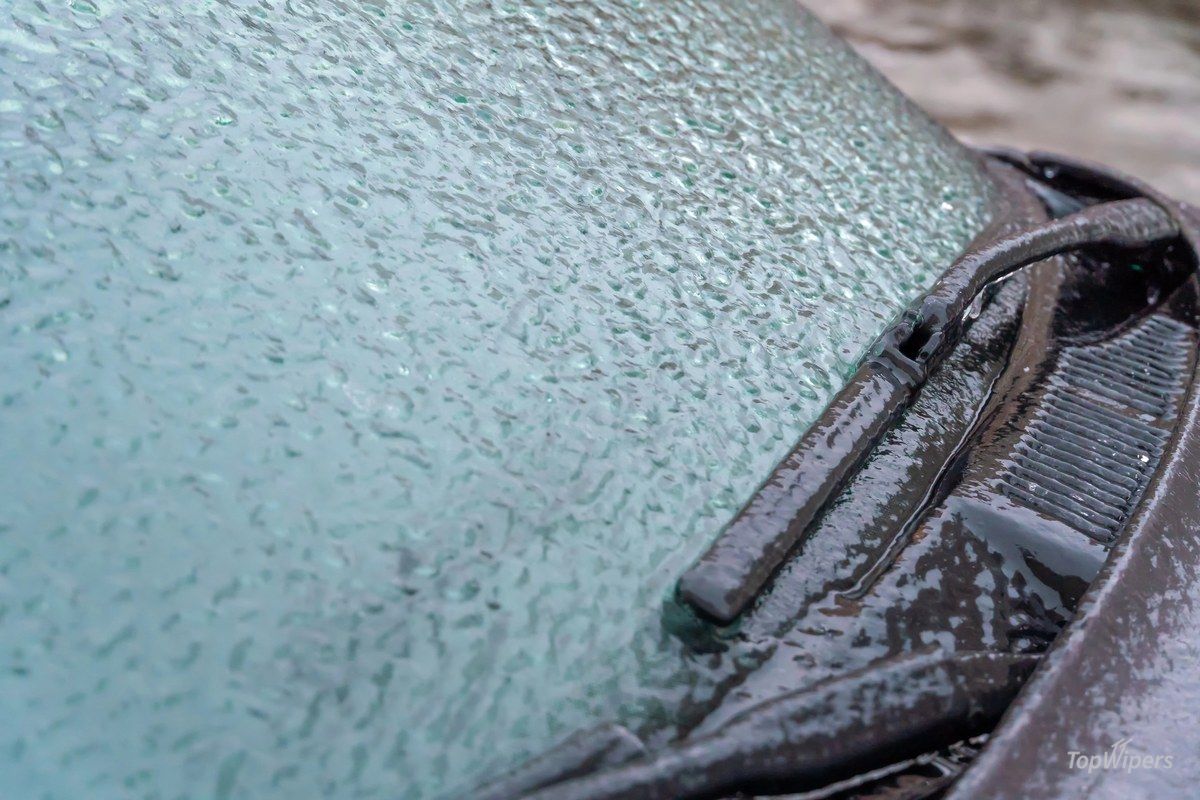
Morning, minus five degrees, you are running late – and the wipers are stuck to the windscreen. Sound familiar? The most important thing at that moment: don't make it worse. A determined “I'll just rip them off” costs you the wiper lip, and a push on the stalk can quickly cost you a fuse or the wiper motor. So first, what to do right now – then how to avoid ending up in this situation in the first place.
If the wipers are already frozen to the glass
- Do not switch the wipers on. The motor will try to move a frozen blade – the fuse, the linkage and the blade itself all suffer.
- Don't tear them off by force. The rubber is stuck in the ice; a yank will rip the lip off or stretch the blade.
- Start the engine, set the windscreen ventilation to warm (not immediately hot) air and, if your car has one, switch on the heated wiper park area.
- While it warms up, clear snow and ice around the wipers with a scraper, without touching the blades.
- After a few minutes, carefully loosen the blade along its entire length with a gentle rocking motion – it should come away by itself, without a jerk.
- Once it is free, lift the arms and clear the ice from the lips with gloved fingers – a crust on the lip smears and squeaks.
Never use: boiling or hot water (thermal shock – a cracked windscreen), a metal scraper on the blade, or “warming it up” with a lighter.
Five ways to prevent freezing
1. Service position overnight
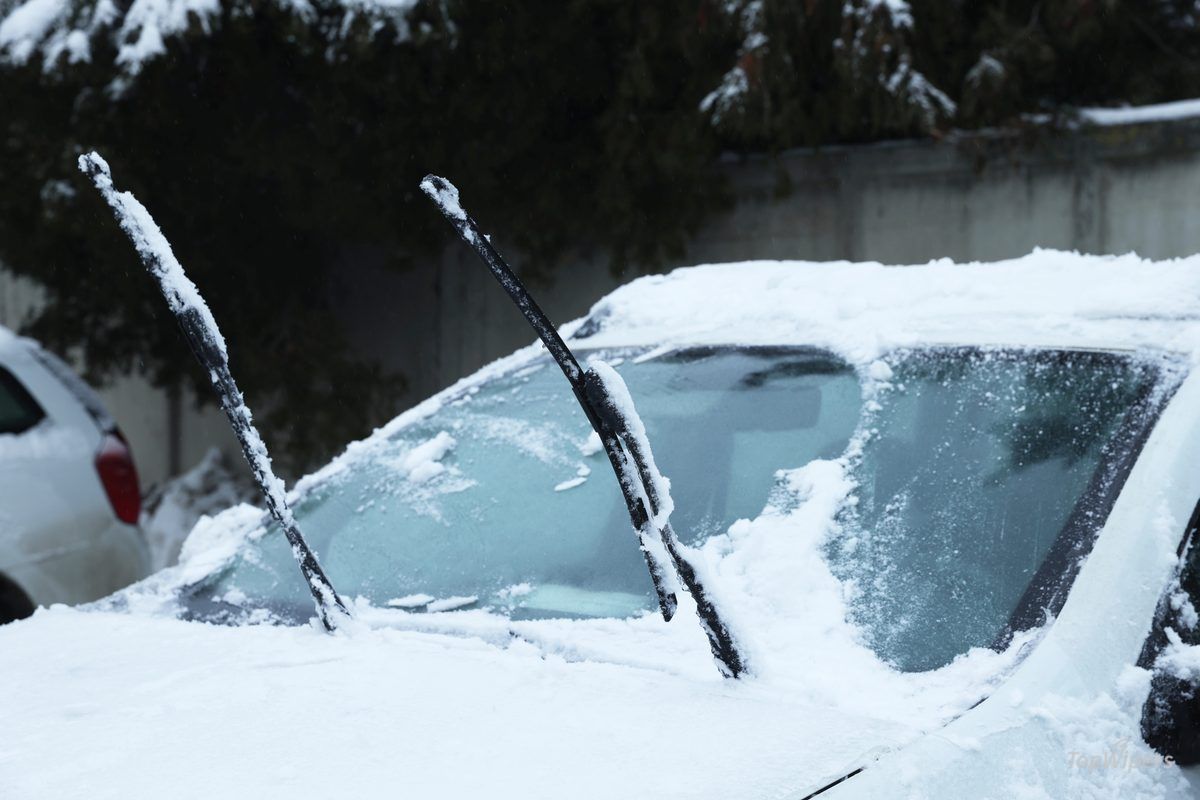
On most modern vehicles the wipers can be put into a service position – they stand upright on the windscreen and are easy to lift off the glass. Wipers that are lifted never freeze to the glass in the first place. How to activate service mode depending on the make is explained in our separate guide.
2. Lift the arms or slip an insulator underneath
Where the design allows it, lift the arms (carefully: in the wind, a raised arm can snap back). If the arms cannot be raised in frost because they sit under the bonnet, a piece of cardboard or a special cover between the blade and the glass solves the problem in seconds.
3. Winter washer fluid in good time, not after the fact
Summer fluid freezes in the nozzles and reservoir at the first frost. In October, fill up with winter washer fluid with a safety margin (preferably rated −20 °C or lower) and pump the system through – until the old fluid is out of the lines.
4. Clear the water off before parking
The main mechanism of freezing: wet glass plus a wet blade plus overnight frost. One last wipe before switching off the ignition and wiping the water away reduces the risk considerably. Better still: wipe the blades with a dry cloth.
5. Healthy wipers going into winter
A worn lip with cracks absorbs water and freezes on harder, and wear shows up first in winter. Check your wipers in October; if they are more than a year old, replace them before the frost. Which type is better in winter – flat beam, hybrid or seasonal winter wipers – is covered in a dedicated article.
FAQ
Can you spray antifreeze washer fluid onto frozen wipers?
As an emergency measure, yes (unlike hot water), but consumption is high and the effect is only local. Warm ventilation is more reliable and gentler.
Does it do any harm to leave the arms raised for a long time?
Better not to do it permanently: the spring is designed for the working position, and a gust of wind can drop the arm onto the glass. For a night or two it is not a problem.
The wipers were stuck and I switched them on. What should I check?
If the wipers are “standing still”, switch them off first, free the blades and check the wiper motor fuse. If the wiper then runs jerkily or the wiped area has shifted, the linkage should be inspected – ideally at a garage.
Do windscreen covers help?
Yes, it is a practical solution for vehicles parked outside: they protect the glass and the wipers at the same time. The only drawback is the minute it takes to put them on and take them off.
Lip not what it used to be after winter? Find new wipers in a minute – make, model, done.